
Benefits of IPTV over traditional cable for Australian families
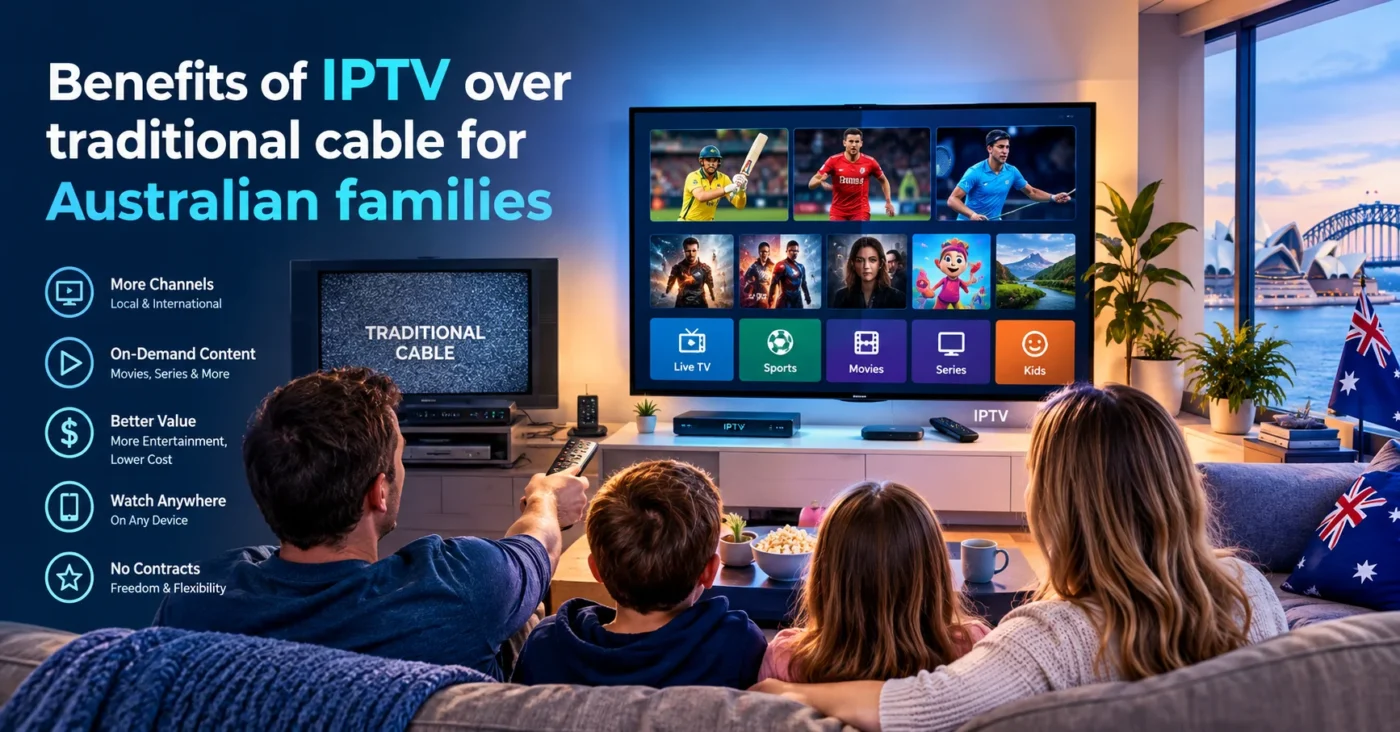
Benefits of IPTV Over Traditional Cable for Australian Families
For many Australian families, the way we watch television has changed significantly. Traditional cable and fixed television services can still provide a familiar viewing experience, but internet-based television gives households another option that can be more flexible and convenient. Australian families may compare cost, flexibility, channels, and streaming quality with IPTV vs. Traditional Cable.
IPTV, or Internet Protocol Television, delivers television content over an internet connection rather than through a traditional cable television network. IPTV services in Australia can make it easier to watch live TV and other content across compatible devices, depending on the service and the content available.
For families comparing IPTV vs traditional cable, the biggest advantages are often flexibility, device choice, convenient access, and the ability to choose a subscription that better suits their viewing habits. However, IPTV also depends on a reliable internet connection, so it is worth understanding both the benefits and limitations before making a decision.
What Is IPTV and How Is It Different From Traditional Cable?
IPTV stands for Internet Protocol Television. Instead of receiving television programming through a conventional cable television network, IPTV uses an internet connection to deliver video content to a compatible device.
The basic difference is the delivery method. Traditional cable television relies on a dedicated cable infrastructure, while IPTV uses internet connectivity. This distinction gives IPTV greater flexibility in terms of where and how viewers can access their television service.
Depending on the provider, IPTV may be accessed through a Smart TV, streaming device, Android TV device, smartphone, tablet, computer or compatible IPTV player. The exact channels, features and supported devices vary between services, so families should check the provider’s current compatibility information before subscribing.
1. More Flexible Viewing Around the Home
One of the main benefits of IPTV vs traditional cable is viewing flexibility. Families do not necessarily have to organise their television experience around a single traditional television connection. IPTV vs Traditional Cable shows why modern streaming can offer more convenience and entertainment choices.
With a compatible IPTV service, household members can potentially access their subscription through supported devices in different parts of the home. For example, one family member might watch television on a Smart TV in the living room while another uses a compatible tablet or smartphone.
This flexibility can be particularly useful in busy Australian households where family members have different schedules and viewing preferences.
Before subscribing, however, check how many simultaneous connections or devices the particular service permits. Some subscriptions may be designed for a single device connection, while others may have different rules.
2. Access Across Compatible Devices
Traditional cable television is generally associated with a television set and its connected service. IPTV can offer a broader range of compatible viewing devices.
Depending on the service and application, IPTV may work with devices such as:
- Smart TVs
- Amazon Fire TV and Firestick
- Android TV devices
- Android smartphones and tablets
- iPhone and iPad
- Compatible IPTV players
This can be useful for families that already own several streaming-capable devices. Rather than relying on one type of television connection, viewers can use supported hardware that fits their existing setup.
If you are unsure which equipment is suitable, review the provider’s device compatibility information before purchasing a subscription.
3. A Convenient Option for Modern Australian Households
Modern households often use the internet for entertainment, communication, education and work. IPTV fits into this internet-connected environment because television content is delivered through the household’s existing online connection.
For families already using a Smart TV or streaming device, getting started can be relatively straightforward when the provider supports that equipment.
A typical IPTV setup involves:
- Choosing a suitable IPTV subscription.
- Checking that your device is supported.
- Installing a compatible IPTV application or player where required.
- Entering the subscription details supplied by the provider.
- Connecting the device to a reliable internet connection.
- Opening the service and selecting available content.
The exact setup process depends on the device, application and IPTV provider, so users should follow the provider’s current instructions rather than assuming that every service works in exactly the same way.
4. Greater Choice in Subscription Options
Another potential advantage of IPTV is the range of subscription structures available. Traditional television packages can sometimes be built around fixed bundles, whereas IPTV providers may offer different plans based on viewing requirements.
Families can compare factors such as:
- Subscription duration
- Number of supported devices
- Available channels and content
- Video quality options
- Compatibility with existing devices
- Customer support
- Trial or refund conditions, where offered
This makes it easier to compare services according to actual household needs rather than simply choosing the largest package.
If you are comparing subscription costs, you can review the available IPTV plans and pricing and check the current details before making a decision.
5. Potentially Better Value for Different Viewing Habits
Value is an important consideration for families. However, the cheapest television service is not automatically the best option. The better approach is to compare what you receive against what your household actually watches.
For example, a family that regularly watches live television, sports, entertainment and other programming may prefer a service with a broad selection of relevant content. Another household may only need a smaller selection of channels.
When comparing IPTV vs traditional cable, look beyond the headline subscription price. Consider whether there are additional equipment costs, installation requirements, contracts, cancellation conditions or separate charges.
For Australian households, prices should be compared in AUD, and current pricing should always be checked directly with the provider because subscription offers and plans can change.
6. Convenient Access to Live TV and Entertainment
IPTV can bring live television and other available programming into an internet-based viewing environment. This can be useful for families that prefer having television, streaming and other digital entertainment options available through modern connected devices.
Depending on the service, IPTV may provide access to live TV channels alongside other types of content. The exact selection varies between providers, so users should check the current channel list and service description before subscribing.
For families interested in live sports, the same principle applies. Do not assume that a particular competition, channel or event is included simply because a provider advertises sports content. Always verify the current availability of the programming you want to watch.
7. Useful for Different Family Viewing Preferences
One challenge with traditional household television is that family members may not always want to watch the same thing at the same time.
One person may prefer news, another may enjoy entertainment, while children may have their own viewing preferences. IPTV can provide greater flexibility where the service and subscription allow access across compatible devices.
For example, a parent could use the main Smart TV while another household member accesses available content through a compatible mobile device. The practical experience depends on the provider’s device and connection policies.
This makes device compatibility and simultaneous-use rules important factors to consider when choosing an IPTV subscription for a family.
8. IPTV Can Work With Existing Smart Home Entertainment Equipment
Many Australian households already have connected televisions and streaming devices. IPTV can complement this setup when the chosen service supports the equipment already in the home.
Before buying additional hardware, check whether your existing television or streaming device can run the required IPTV application or player.
For example, a household with a compatible Smart TV may not need to purchase another television device simply to access an IPTV service. Similarly, users with compatible Fire TV or Android TV equipment may already have the hardware required for their preferred setup.
This can make the transition easier and may reduce unnecessary equipment purchases.
9. Internet-Based Viewing Gives Families More Flexibility
Because IPTV relies on an internet connection, the service is not tied to the same delivery method as traditional cable television. This can be an advantage for households that prefer internet-based entertainment services.
At the same time, this is one of IPTV’s most important limitations. Your viewing experience depends partly on the quality and stability of your internet connection.
Factors that can affect streaming performance include:
- Internet speed
- Wi-Fi signal strength
- Network congestion
- Router performance
- Device capabilities
- Video resolution
- The provider’s infrastructure
If buffering occurs, users should first check their internet connection, restart their network equipment where appropriate, test the device connection and reduce unnecessary network activity. Persistent problems may require assistance from the IPTV provider or internet service provider.
IPTV vs Traditional Cable: A Simple Family Comparison
| Factor | IPTV | Traditional Cable |
|---|---|---|
| Delivery method | Internet connection | Traditional cable infrastructure |
| Device flexibility | Can support multiple compatible device types | Typically centred around the cable television setup |
| Internet dependency | Yes | Not necessarily dependent on household internet for television delivery |
| Setup | Usually involves a compatible device, application or IPTV player | Usually involves the provider’s cable equipment and connection |
| Subscription choice | Varies by provider | Varies by provider |
| Streaming performance | Can be affected by internet and network conditions | Uses its dedicated delivery infrastructure |
The comparison shows why IPTV can appeal to families that prioritise flexibility and device choice, while traditional cable may remain attractive to households that prefer a conventional television setup.
What Australian Families Should Check Before Choosing IPTV
Not every IPTV service is the same. Before paying for a subscription, take time to check the service rather than choosing solely on the basis of channel numbers or promotional claims.
Check Content Availability
Confirm that the channels and programming you actually want are included. Channel availability can vary between providers and can change over time.
Check Device Compatibility
Make sure the service supports your Smart TV, Firestick, Android device, iPhone, iPad or other intended equipment.
Check Internet Requirements
A stable internet connection is essential for internet-based television. Consider your household’s normal network performance, especially if several people use the connection simultaneously.
Read the Subscription Terms
Review the plan duration, device limits, payment conditions, cancellation rules, refund policy and any trial terms before purchasing.
Choose Legitimate Content
IPTV is a delivery technology; its legality depends on the content and service being provided. Australian viewers should choose services that have the appropriate rights or licences for the content they provide and avoid services offering unauthorised access to copyrighted programming.
Is IPTV a Good Choice for Australian Families?
Australian IPTV can be a practical alternative to traditional cable for families that value flexibility, internet-based viewing and compatibility with modern streaming devices.
Its biggest strengths are the ability to use compatible devices, access television through an internet connection, compare different subscription options and integrate viewing into a household’s existing digital entertainment setup.
However, IPTV is not automatically better for every household. Families with unreliable internet connections may experience buffering, and users should always check device compatibility, content availability and subscription terms before signing up.
The best choice ultimately depends on how your family watches television, which devices you already own, what content you need and how much flexibility you want from your television service.
Frequently Asked Questions
What is IPTV in Australia?
IPTV is television delivered using Internet Protocol technology over an internet connection. Australian viewers can access IPTV through compatible Smart TVs, streaming devices, computers, smartphones and tablets, depending on the service.
Is IPTV better than traditional cable?
It depends on the household. IPTV can offer greater device flexibility and internet-based access, while traditional cable can provide a more conventional television setup. Families should compare content, cost, reliability, equipment and subscription terms.
Can families watch IPTV on a Smart TV?
Yes, many IPTV services support compatible Smart TVs. However, compatibility depends on the specific television model, operating system, IPTV application and provider.
Can IPTV work on Firestick?
IPTV can work on compatible Amazon Fire TV and Firestick devices when the chosen service and IPTV application support them. Always check current compatibility and follow the provider’s setup instructions.
Does IPTV require fast internet?
IPTV requires a stable internet connection, and higher-quality video can require more bandwidth. Actual requirements vary according to video quality, household network usage, device and service.
What causes buffering on IPTV?
Buffering can result from an unstable internet connection, weak Wi-Fi, network congestion, device limitations or issues affecting the streaming service. Checking each of these factors can help identify the cause.
What should I check before buying an IPTV subscription?
Check channel and content availability, supported devices, connection requirements, subscription pricing, device limits, cancellation and refund conditions, customer support and whether the service has the necessary rights to provide its content.
Where can I learn more about IPTV services and plans?
You can explore the Pro IPTV Australia website for general service information.
Final Thoughts
The benefits of IPTV over traditional cable largely come down to flexibility, device choice and internet-based convenience. For Australian families with compatible devices and a reliable internet connection, IPTV can provide a modern way to access available television content without relying on a traditional cable television setup.
At the same time, choosing an IPTV service should involve more than comparing channel numbers or prices. Families should look at content rights, device compatibility, internet performance, subscription conditions and customer support.
If you decide IPTV suits your household, take the time to compare the available subscription options and choose a service that matches your family’s actual viewing needs.